
Rural Decline — The Quiet Demographic Shift Reshaping National Economies
Across developed nations, a demographic transformation unfolds largely outside the spotlight of urban media centers and political capitals. Rural communities are emptying at an accelerating pace, creating a shift that extends far beyond local economic concerns. This rural decline represents one of the most significant yet underappreciated forces reshaping how countries organize their economies, allocate resources, and plan for long-term stability.
The concentration of population and economic activity in metropolitan areas creates new vulnerabilities that policymakers are only beginning to grasp. While cities capture the benefits of clustering effects and innovation spillovers, entire regions lose their economic foundation, leaving countries with lopsided development patterns that may prove difficult to reverse.
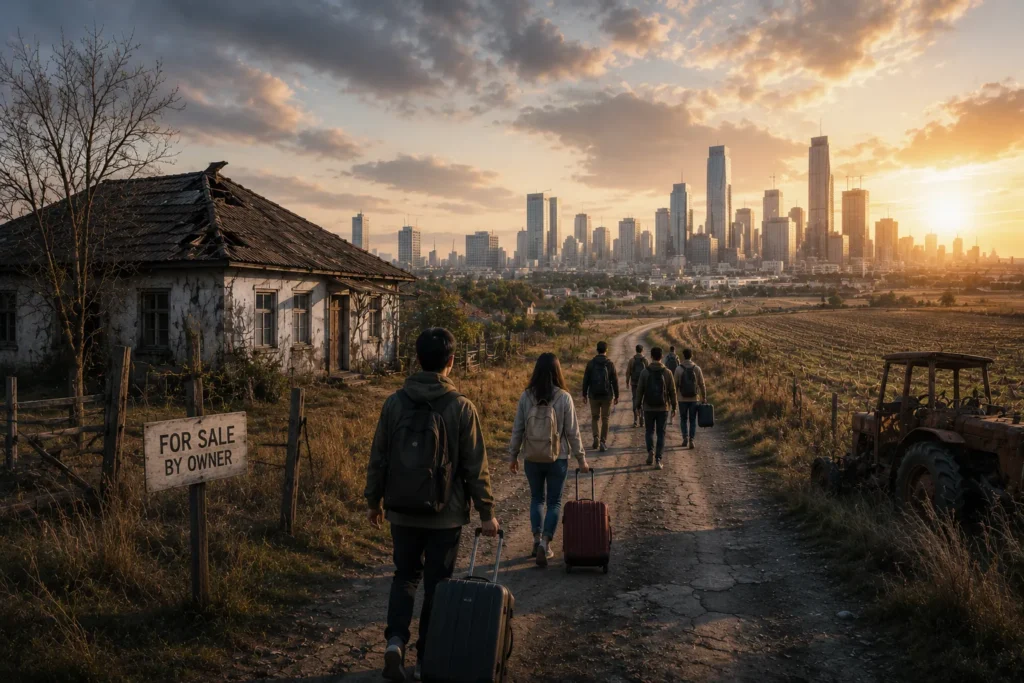
Young People Abandon Rural Communities for Urban Opportunities
The movement of younger generations from rural areas to cities has become a defining feature of modern demographic change. College-bound students leave small towns for universities concentrated in metropolitan areas, and many never return. Employment opportunities in technology, finance, and professional services cluster in cities, creating a gravitational pull that rural communities struggle to counteract.
This migration pattern strips rural areas of their most economically productive residents precisely when those communities need entrepreneurial energy and fresh ideas. The result is a self-reinforcing cycle where the departure of young people reduces local economic dynamism, which in turn makes these areas less attractive to the next generation.
Educational Systems Accelerate the Brain Drain
Rural school systems often prepare their brightest students for success in urban environments, inadvertently contributing to local talent loss. High-achieving students receive guidance toward universities and career paths that lead away from their home communities, while rural areas offer fewer internships, research opportunities, or entry-level positions in growing sectors.
Economic Investment Flows Toward Metropolitan Regions
Private capital and government resources increasingly concentrate in major urban centers, where companies can access specialized labor markets, suppliers, and knowledge networks. Venture capital funding, research and development spending, and corporate headquarters cluster in a handful of metropolitan areas, leaving rural regions with limited access to growth capital.
This concentration creates powerful economic advantages for cities but starves rural areas of the investment needed to diversify their economies beyond traditional sectors like agriculture, mining, or manufacturing. When those traditional industries face disruption, rural communities have few alternative economic engines.
Regional development programs attempt to redirect investment toward struggling areas, but these efforts often work against market forces that favor urban concentration. The scale of private investment dwarfs public programs, making it difficult for policy interventions to counteract broader economic trends.
Aging Demographics Create Compound Challenges
Rural areas face a demographic double burden: younger residents leave while older residents age in place. This creates communities with declining birth rates, rising healthcare costs, and shrinking tax bases exactly when they need resources to adapt to economic change.
The aging of rural populations affects everything from local business viability to political representation. Consumer markets shrink as populations decline and age, making it harder for businesses to remain profitable. Healthcare systems strain under the burden of serving dispersed elderly populations, often with limited transportation options and specialist shortages.
Healthcare Infrastructure Faces Sustainability Pressures
Rural hospitals and medical practices struggle with the economics of serving aging, dispersed populations. Many rural hospitals have closed in recent years, forcing patients to travel longer distances for care and making these areas less attractive to working-age families who need access to medical services.
Agricultural Sectors Struggle with Labor Market Changes
Food production, despite its technological advances, still requires significant human capital for many crops and livestock operations. As rural populations decline, agricultural sectors face growing challenges in attracting workers, particularly for physically demanding or seasonal work.
The aging of farm operators compounds this challenge. Many family farms lack clear succession plans, as younger family members pursue careers in urban areas. This creates questions about the future structure of agricultural production and whether consolidation toward larger, more mechanized operations can maintain food security.
Immigration has filled some agricultural labor gaps, but policy restrictions and enforcement actions can disrupt these labor flows, leaving producers with few alternatives in regions where domestic workers are increasingly scarce.
Infrastructure Costs Become Economically Unsustainable
Maintaining roads, utilities, broadband networks, and public services becomes increasingly expensive per capita as rural populations decline. Fixed infrastructure costs spread across fewer residents and businesses, creating fiscal pressures that force difficult choices about service levels.
Governments face tough decisions about which rural communities merit continued infrastructure investment versus which should be allowed to decline naturally. These decisions carry significant political risks, as rural areas often maintain disproportionate political influence through electoral systems that weight geography alongside population.
The economics of infrastructure provision favor density, but rural areas require extensive networks to connect dispersed populations. This mismatch creates ongoing tensions in budget allocation and service provision that will likely intensify as rural populations continue to decline.
Urban-Rural Policy Disagreements May Intensify
Different economic realities between urban and rural areas create divergent policy preferences that can strain national political systems. Urban areas benefit from immigration, international trade, and regulations that support service industries, while rural areas may favor policies that protect traditional industries and cultural values.
These divisions affect everything from tax policy to environmental regulations to infrastructure spending. As economic divergence between urban and rural areas widens, finding policy compromises becomes more difficult, potentially leading to political instability or governance challenges.
Population Distribution Affects National Economic Resilience
The concentration of economic activity and population in a few metropolitan areas creates both opportunities and vulnerabilities for national economies. While clustering effects can boost productivity and innovation, over-concentration may reduce economic resilience and create systemic risks.
Countries with extreme urban concentration may find themselves vulnerable to disruptions that affect major metropolitan areas. Natural disasters, infrastructure failures, or economic shocks that impact primary cities can have outsized national effects when too much economic activity concentrates in too few places.
Rural decline also affects demographic resilience, as countries lose the distributed population base that historically provided economic and social stability. The implications extend beyond national borders, influencing everything from food security to international competitiveness in an increasingly complex global economy.
This quiet demographic shift deserves far more attention from policymakers and strategic planners than it currently receives. Countries that fail to address the growing imbalances between urban concentration and rural decline may face consequences that extend well beyond their rural communities themselves.