Uzbekistan’s Regional Rise — How Central Asia’s Most Populous Nation Is Expanding Its Influence
Uzbekistan is quietly reshaping Central Asia’s power dynamics. Once viewed primarily through the prism of Russian or Chinese influence, the region’s most populous nation has emerged as an independent force driving economic integration and political cooperation across the former Soviet republics. This transformation reflects broader changes in how Central Asian states navigate their strategic environment, generating momentum from within rather than simply responding to external pressures.

Uzbekistan Emerges as Central Asia’s Leading Reform Driver
President Shavkat Mirziyoyev’s administration has fundamentally altered Uzbekistan’s trajectory since 2016. The government dismantled currency controls, opened previously restricted sectors to foreign investment, and streamlined bureaucratic processes that had stifled economic activity for decades. These reforms created measurable results: GDP growth averaged 5.3% between 2017 and 2022, while foreign direct investment increased from $500 million in 2016 to over $2 billion by 2022.
Political modernization accompanies economic changes
The reform agenda extends beyond economics into governance structures. Tashkent reduced restrictions on media coverage, allowed greater civic participation, and established mechanisms for public feedback on policy proposals. While these changes remain incremental, they signal a deliberate shift toward more responsive institutions that can sustain long-term development.
Infrastructure Investment Strengthens Regional Connectivity
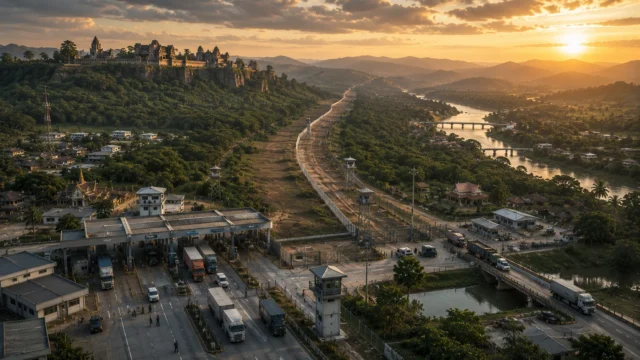
Uzbekistan’s geographic position makes it a natural hub for Central Asian trade flows. The government has capitalized on this advantage through targeted infrastructure spending. The Angren-Pap railway, completed in 2016, connects the Ferghana Valley to the rest of the country without transiting neighboring territories. More ambitious projects include the proposed Uzbekistan-Afghanistan-Pakistan railway, which could provide Central Asian exporters direct access to Pakistani ports.
Transportation links create economic leverage
These connectivity projects serve dual purposes. They reduce Uzbekistan’s dependence on traditional transit routes through Russia while positioning the country as an essential link for regional trade. Kazakhstan’s agricultural exports increasingly move through Uzbek territory, while Tajikistan and Kyrgyzstan rely on Uzbek infrastructure for energy supplies and commercial shipments.
Demographic Advantages Fuel Economic Expansion
With 35 million inhabitants, Uzbekistan contains nearly half of Central Asia’s population. This demographic weight translates into the region’s largest domestic market and most substantial labor force. Uzbek workers contribute significantly to regional economies through both domestic employment and cross-border migration, while the country’s consumer base attracts investment from regional and international companies.
The population structure offers additional advantages. Approximately 60% of Uzbeks are under 30, creating both consumption demand and workforce capacity that neighboring countries cannot match. This demographic dividend supports sustained economic growth if properly channeled through education and job creation programs.
Diplomatic Engagement Expands Across Neighboring States
Tashkent has systematically improved relations with all Central Asian neighbors since 2016. Border demarcation agreements with Kazakhstan and Kyrgyzstan resolved longstanding territorial disputes, while water-sharing arrangements with Tajikistan reduced regional tensions. Trade volumes reflect this diplomatic progress: bilateral trade with Kazakhstan reached $4.2 billion in 2022, while commerce with Kyrgyzstan grew by 40% annually between 2017 and 2022.
Regional cooperation mechanisms gain momentum
Uzbekistan now actively participates in multilateral Central Asian initiatives that it previously avoided. The country rejoined the Central Asian regional electricity market and signed agreements for coordinated water management. These commitments demonstrate Tashkent’s willingness to accept mutual obligations in exchange for regional influence.
International Investment Flows Accelerate Economic Growth
Foreign investors have responded positively to Uzbekistan’s reform agenda. South Korean companies invested over $7 billion in Uzbek projects between 2017 and 2023, focusing on petrochemicals, automotive assembly, and renewable energy. Chinese firms committed $3.5 billion to infrastructure and industrial projects, while European investors entered banking, telecommunications, and consumer goods sectors.
The investment pattern reveals strategic priorities. Energy sector investments aim to reduce dependence on commodity exports, while manufacturing projects target both domestic consumption and regional export markets. This diversification strengthens Uzbekistan’s economic foundation while reducing vulnerability to external shocks.
Geographic Position Creates Strategic Value
Uzbekistan’s location between major Eurasian markets offers natural advantages that reforms have activated. The country borders all other Central Asian states except Turkmenistan, making it essential for regional integration. Additionally, Uzbekistan provides the shortest overland route between Russian markets and South Asian destinations, positioning it as a key link in emerging trade corridors.
The government has leveraged this position through targeted policy initiatives. Special economic zones near border crossings facilitate regional trade, while simplified customs procedures reduce transaction costs for transit cargo. These measures increase the volume of goods moving through Uzbek territory while generating revenue and employment.
Central Asia Develops Its Own Centers of Influence
Uzbekistan’s rise illustrates a broader regional transformation where Central Asian states generate independent political and economic momentum. Rather than simply choosing between Russian, Chinese, or Western partnerships, countries like Uzbekistan pursue multi-directional policies that maximize their strategic options.
This shift has practical implications for regional stability and development. As Uzbekistan strengthens its economic base and diplomatic relationships, it becomes capable of mediating disputes, facilitating trade agreements, and providing alternatives to traditional power centers. In my view, Uzbekistan has the potential to become the economic center of Central Asia. If reforms continue and regional cooperation deepens, its influence could extend well beyond its borders, creating a more balanced and resilient regional order that reflects local priorities rather than external impositions.