
Armenia’s Election Signals a Geopolitical Crossroads as the Country Moves Further Away From Moscow
Armenia’s recent election delivered more than a domestic political verdict—it confirmed the country’s accelerating drift from Moscow’s orbit. Prime Minister Nikol Pashinyan’s victory represents a decisive moment in the South Caucasus, where traditional security arrangements are crumbling and smaller nations are charting new strategic paths. The result validates Armenia’s pivot toward Europe while highlighting the broader challenge facing post-Soviet states seeking alternatives to Russian influence.
Pashinyan Consolidates Power in Pivotal Victory
The ruling Civil Contract party’s decisive win removes any ambiguity about Armenia’s political direction. Pashinyan secured his position despite facing intense criticism over territorial losses in Nagorno-Karabakh and economic pressures from the ongoing regional realignment. The election functioned as a clear referendum on whether Armenians would endorse their leader’s strategy of reducing dependence on Moscow while pursuing closer ties with Western institutions.
Opposition forces, many with pro-Russian sympathies, failed to capitalize on public frustration over security setbacks. This outcome suggests that despite painful losses, Armenian voters prefer Pashinyan’s vision of strategic diversification over a return to closer alignment with Russia. The margin of victory provides Pashinyan with a strong mandate to continue reshaping Armenia’s foreign policy orientation.
Moscow’s Declining Influence Becomes Undeniable
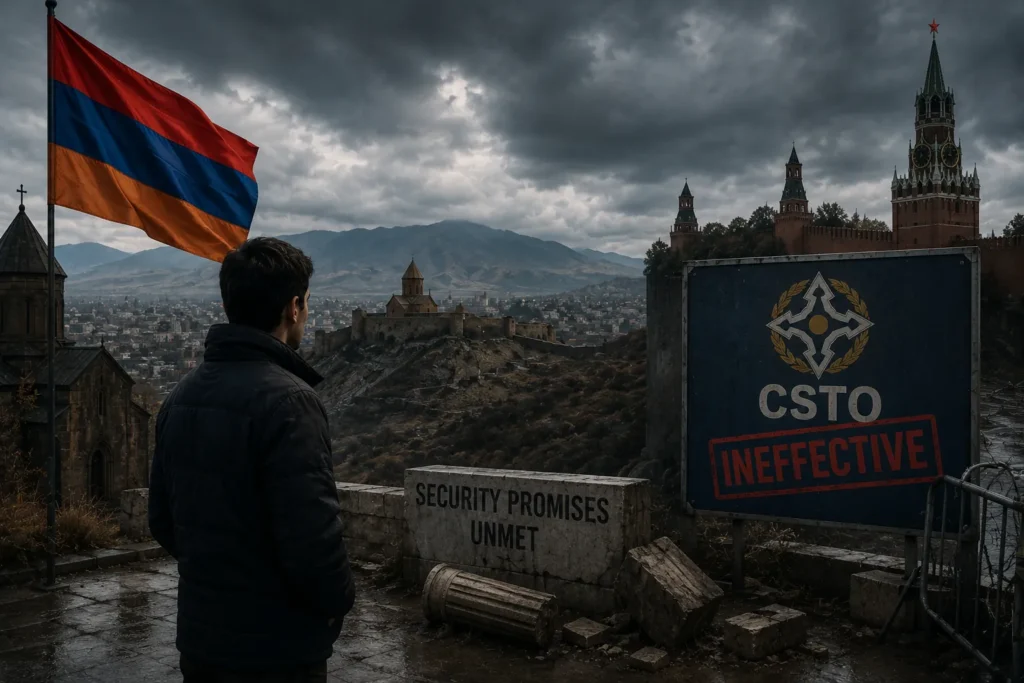
Armenia’s relationship with Russia has deteriorated significantly since the 2020 Nagorno-Karabakh conflict, when Moscow’s limited intervention left many Armenians questioning the value of their security partnership. The Collective Security Treaty Organization (CSTO), dominated by Russia, has proven ineffective in addressing Armenia’s core security concerns, particularly regarding Azerbaijani military pressure.
Recent incidents have further eroded confidence in Russian support. Moscow’s failure to respond decisively to border clashes between Armenia and Azerbaijan has convinced many in Yerevan that Russia prioritizes its relationship with Turkey and Azerbaijan over Armenian security interests. This shift represents a fundamental breach in what was once considered an unshakeable alliance rooted in shared Orthodox Christian identity and historical ties.
The economic dimension adds another layer of strain. Armenia has moved to reduce energy dependence on Russia while exploring alternative supply routes and partnerships. These steps signal a comprehensive reassessment of the relationship rather than temporary diplomatic tensions.
European Integration Gains Momentum
Armenia’s pursuit of European partnerships has accelerated under Pashinyan’s leadership, with tangible progress in multiple areas. The European Union has increased development assistance and opened new diplomatic channels, recognizing Armenia’s strategic importance in a region where Western influence was previously minimal.
Concrete Steps Toward Western Integration
The Armenian government has signed several agreements with EU institutions covering trade facilitation, judicial reform, and civil society development. These partnerships offer Armenia alternative sources of investment and technical expertise while reducing reliance on Russian-dominated regional institutions. France has emerged as a particularly important partner, leveraging historical ties and its own strategic interests in countering Russian and Turkish influence.
Parliamentary cooperation between Armenia and European institutions has expanded, creating new channels for political dialogue and policy coordination. These developments indicate that Armenia’s European orientation extends beyond symbolic gestures to include substantive institutional relationships.
Regional Diplomacy Takes Center Stage
Armenia’s leadership recognizes that sustainable security requires direct engagement with regional neighbors, particularly Azerbaijan. The peace process remains fragile, but both countries have incentives to reach a comprehensive settlement that could transform South Caucasus dynamics.
Pashinyan’s government has signaled willingness to recognize Azerbaijan’s territorial integrity in exchange for security guarantees and the establishment of normal diplomatic relations. This approach represents a significant departure from previous Armenian positions and reflects the new government’s pragmatic assessment of regional realities.
Turkey’s role remains complex, as Ankara maintains close ties with Azerbaijan while showing interest in normalizing relations with Armenia. The potential for Turkish-Armenian rapprochement creates additional diplomatic opportunities but also introduces new variables into an already complicated regional equation.
Internal Opposition Remains Organized
Despite Pashinyan’s electoral success, pro-Russian political forces retain significant organizational capacity and popular support. These groups argue that Armenia’s pivot away from Moscow undermines national security and abandons beneficial economic relationships. They point to increased regional instability and territorial losses as evidence that the new foreign policy approach has failed.
The Armenian Apostolic Church and other traditional institutions maintain skeptical views of European integration, preferring closer ties with Orthodox Russia. This cultural and religious dimension adds depth to political opposition beyond simple geopolitical calculations.
However, the opposition’s failure to present a compelling alternative vision has limited its electoral appeal. Many Armenians recognize the shortcomings of Russian partnership while remaining uncertain about European alternatives, creating space for Pashinyan’s balanced approach to maintain popular support.
South Caucasus Enters Strategic Transformation
Armenia’s election occurs within a broader regional realignment that could reshape South Caucasus geopolitics for decades. Azerbaijan’s military victory in Nagorno-Karabakh has strengthened its position, while Georgia continues its own gradual integration with Western institutions despite Russian pressure.
The outcome suggests that Russian influence in the former Soviet periphery faces genuine challenges from local populations seeking alternative partnerships. Unlike previous periods of tension, current trends reflect structural changes rather than temporary diplomatic disputes.
Small States Redefine Strategic Autonomy
Armenia’s experience illustrates how smaller countries navigate an increasingly complex international environment where traditional alliance structures no longer guarantee security or prosperity. The election validates a strategy of diversified partnerships over exclusive alignment with any single great power.
This approach may become a model for other post-Soviet states facing similar dilemmas about balancing historical relationships with emerging opportunities. Armenia’s success or failure in managing this transition could influence strategic calculations across Eastern Europe and Central Asia. The country is attempting something genuinely difficult: maintaining stability while fundamentally reorienting its external relationships in one of the world’s most volatile regions. The stakes extend far beyond Armenia’s borders, as the outcome will demonstrate whether small states can successfully chart independent courses in an era of great power competition.