
The Balkans in Modern Europe — Why the Region Still Matters Geopolitically
The Balkans rarely dominate global headlines the way they did in the 1990s. But strategic relevance does not require constant crisis to persist. Across energy routes, EU enlargement talks, and competing external interests, the region continues to shape outcomes that matter well beyond its borders. Understanding the Balkans in modern Europe means looking past the historical lens of conflict and recognizing what the region has quietly become: a connector, a contested space, and an unfinished piece of Europe’s political architecture.
A Region That Links Three Major European Zones
Why geographic position still carries strategic weight
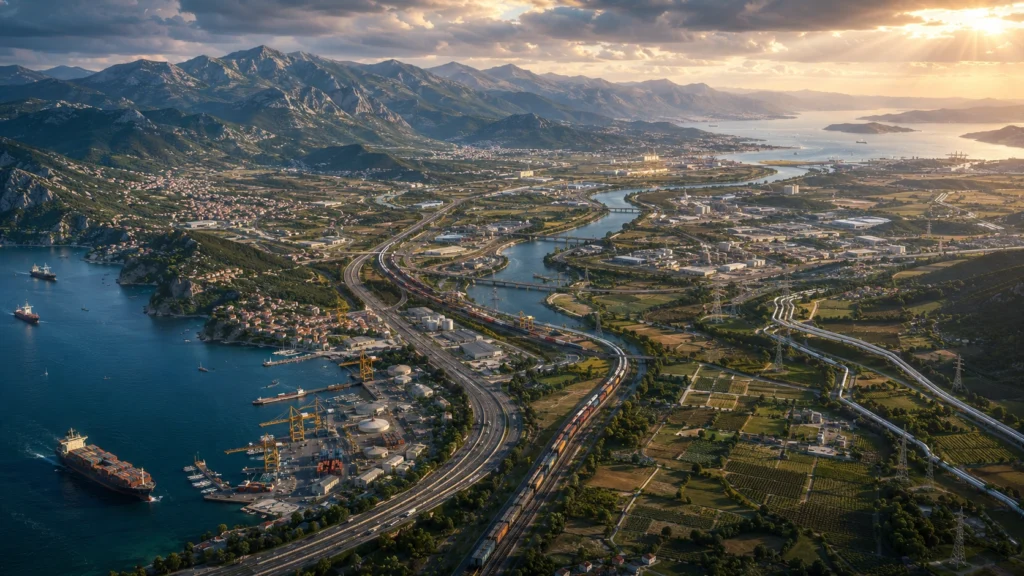
Few parts of Europe sit at such a productive geographic crossroads. The Balkans connect Central Europe to the Mediterranean coast and reach eastward toward the Black Sea — which means any shift in the region’s political stability, infrastructure, or alliances carries consequences that radiate in multiple directions.
This position is not abstract. Serbia sits along several pan-European transport corridors. Greece and Bulgaria anchor NATO’s southeastern flank. Albania and Montenegro offer Adriatic access. Taken together, these countries form a chain between Western Europe and the broader neighborhood of the Middle East, the Caucasus, and Central Asia. That chain matters to trade, to energy, and to security planning.
European Integration Is Still Reshaping Political Incentives
The EU enlargement process remains unfinished — and that gap has consequences
Several Western Balkan countries have been candidates or potential candidates for EU membership for years, in some cases decades. Albania and North Macedonia opened accession negotiations in 2022. Serbia and Montenegro have been in formal accession processes since 2012 and 2012 respectively, with progress that has been real but slow. Bosnia and Herzegovina received candidate status in December 2022.
The EU enlargement process creates a structured set of incentives — legal reforms, institutional alignment, trade access — that gradually pull these economies and governance systems closer to European standards. When that process stalls, the incentive gap becomes a risk. Countries left in a prolonged waiting room tend to see democratic backsliding or become more susceptible to competing external influence.
This dynamic is precisely why EU officials have periodically revisited the enlargement agenda with renewed urgency, particularly after Russia’s full-scale invasion of Ukraine in February 2022 reminded policymakers that Europe’s eastern and southeastern periphery is not a settled question.
Energy and Transport Infrastructure Are Raising the Stakes
Pipelines, corridors, and ports are changing what the region is worth
The Trans Adriatic Pipeline, which carries Azerbaijani natural gas across Greece, Albania, and into Italy, became fully operational in 2020. It runs directly through the Balkans and now supplies a growing share of Southern Europe’s gas. That single infrastructure project changed the region’s profile in European energy planning.
Beyond gas, transport connectivity is accelerating. The EU-backed Western Balkans Investment Framework has channeled billions of euros into roads, rail, and border infrastructure. China’s Belt and Road Initiative has also funded infrastructure projects in Serbia and other countries, raising questions about long-term debt exposure and strategic dependencies.
The region is not just a transit zone — it is becoming a logistical node. The port of Piraeus in Greece, majority-owned by COSCO of China since 2016, handles a significant share of Asian goods entering Europe. These infrastructure developments make the Balkans materially important to supply chains, not just symbolically relevant to European identity.
Political Stability Remains a Genuine Work in Progress
Institutional fragility still shapes security calculations
Stability in the Balkans is not a background assumption — it is something that requires active maintenance. Bosnia and Herzegovina continues to function under the Dayton Agreement architecture from 1995, a structure increasingly strained by domestic political gridlock and nationalist pressures. Kosovo’s status remains disputed, with Serbia refusing to recognize its independence and five EU member states doing the same.
The Serbia-Kosovo relationship flared into renewed tension in 2022 and 2023, with road blockades, armed incidents in northern Kosovo, and diplomatic escalations involving EU and US mediators. These are not residual echoes of the past — they are live political risks that affect NATO’s posture and EU cohesion.
Regional organizations like the Berlin Process and the Common Regional Market initiative are pushing for greater economic integration among the Western Balkan six, with mixed but genuine results. The path forward depends less on declarations than on whether domestic political actors find more value in cooperation than in nationalist posturing.
External Powers Are Not Passive Observers
The Balkans sit at the intersection of several competing interests
The United States maintains a significant presence through NATO and bilateral security partnerships, particularly with Albania, Montenegro, and North Macedonia — all three of which are now Alliance members. Washington also plays an active role in the Serbia-Kosovo dialogue.
Russia retains cultural and political influence in Serbia and the Republika Srpska entity of Bosnia, partly through energy ties and partly through Orthodox Church networks and media channels. That influence has come under pressure since 2022, but it has not disappeared.
China’s footprint is primarily economic — infrastructure loans, manufacturing investments, and trade agreements — but economic leverage has political dimensions. Türkiye, meanwhile, maintains historical ties across the region, particularly in Bosnia and Kosovo, and has positioned itself as both a regional partner and a bilateral actor pursuing its own strategic interests.
No single external power dominates the Balkans, but the combination of competing interests means the region is a space where great-power competition plays out in concrete, observable ways.
Economic Development Is Slowly Shifting the Region’s Trajectory
Investment and trade are building a foundation for longer-term integration
GDP per capita across the Western Balkans remains well below the EU average, but growth rates in countries like Kosovo, Serbia, and Albania have been relatively strong over the past decade. Foreign direct investment has increased, particularly in manufacturing, logistics, and technology services.
The Common Regional Market, agreed upon in 2020 under the auspices of the Regional Cooperation Council, aims to align standards, reduce trade barriers, and increase labor mobility among the six Western Balkan economies. It is modeled partly on EU single market principles and is designed to build economic resilience while accession timelines remain uncertain.
These developments matter because economic integration tends to reduce the incentive for conflict and increase the cost of instability. They do not guarantee political progress, but they do create material interests in stability that governments and businesses have reason to protect.
The Balkans Will Remain Central to Europe’s Long-Term Political Map
The region’s strategic importance has not faded — it has shifted form. The Balkans in modern Europe are less defined by the wars of the 1990s and more by energy routes, EU enlargement dynamics, infrastructure competition, and the presence of multiple external actors with different agendas. That combination makes the region genuinely consequential.
The case for treating the Balkans as a connector rather than a problem zone is not just optimistic framing — it reflects where the region is actually heading when its institutions function and its integration processes move forward. Europe’s long-term political coherence depends partly on whether this southeastern corner is brought fully into the continent’s economic and security architecture. The more that process stalls, the more others fill the space.