
BRICS Pushes a New Financial Order — Is the Dollar’s Global Dominance at Risk?
The dollar has reigned supreme in global finance for decades, but that dominance faces its most coordinated challenge yet. BRICS nations—Brazil, Russia, India, China, and South Africa—are accelerating efforts to build alternative financial systems that could fundamentally reshape how the world conducts trade and stores value. While the idea of a sudden dollar collapse is often overstated, the direction of change is undeniable: countries are actively seeking ways to reduce their dependency on the dollar-dominated system and increase their strategic autonomy.
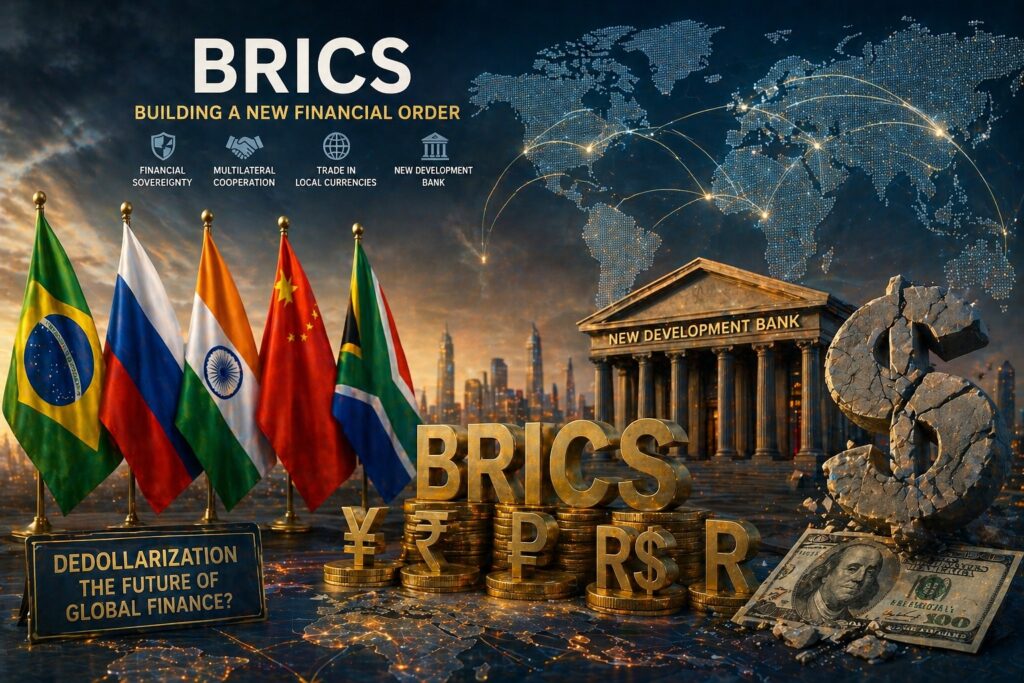
BRICS Nations Accelerate Local Currency Trading
Member countries within the BRICS bloc are rapidly expanding trade settlements in their own currencies, bypassing the dollar in bilateral transactions. China and Russia have led this charge, with their bilateral trade increasingly conducted in yuan and rubles rather than dollars. India has established rupee-denominated trade agreements with several partners, while Brazil has negotiated currency swap arrangements to reduce dollar exposure in regional commerce.
This shift reflects more than simple economic optimization. The push represents a calculated effort to insulate these economies from dollar-based sanctions and monetary policy decisions made in Washington. When the Federal Reserve adjusts interest rates or the U.S. implements financial restrictions, countries with heavy dollar exposure feel immediate effects on their domestic economies.
Trade Volumes in Alternative Currencies Continue Growing
Recent data shows that China-Russia trade conducted in yuan and rubles has grown substantially, reaching significant portions of their total bilateral commerce. Similar patterns emerge across other BRICS partnerships, with local currency arrangements becoming standard rather than experimental. These developments create practical precedents for other emerging economies considering similar moves.
Alternative Payment Networks Gain Momentum Outside Western Systems
New financial infrastructure is emerging that operates independently of Western-controlled networks like SWIFT. China’s Cross-Border Interbank Payment System (CIPS) has expanded its reach, while Russia developed its own System for Transfer of Financial Messages (SPFS) following Western sanctions. These platforms enable international transactions without routing through dollar-based clearing systems.
The strategic implications extend beyond simple payment processing. Countries joining these networks gain access to financial tools that cannot be easily disrupted by Western policy decisions. This creates alternative pathways for international commerce that reduce reliance on traditional banking relationships centered in New York and London.
Brazil and India have begun exploring integration with these alternative systems, signaling that the infrastructure could expand beyond its current scope. The network effect becomes powerful once enough participants join—creating genuine alternatives to established Western financial architecture.
Energy Markets Drive Currency Diversification
Oil and commodity transactions increasingly occur in non-dollar denominations, challenging the petrodollar system that has anchored dollar demand for half a century. Saudi Arabia has begun accepting yuan for some oil sales to China, while Russia conducts energy trade with various partners in rubles or other agreed currencies.
This shift strikes at one of the dollar’s core advantages: its role as the primary currency for energy transactions. When major oil producers accept alternative currencies, they reduce global dollar circulation and create new demand for other monetary units. The change may appear gradual, but it affects the fundamental supply and demand dynamics that have supported dollar dominance.
Commodity markets beyond energy show similar patterns. Agricultural products, metals, and other raw materials increasingly trade in local currencies between BRICS members, reducing the dollar’s role as an intermediary in these essential transactions.
Emerging Economies Explore New Financial Flexibility
Countries across the Global South are watching BRICS developments closely and considering their own moves toward financial diversification. Nations that have experienced currency crises or economic disruptions tied to dollar volatility see potential benefits in reducing their exposure to a single currency system.
Central banks in various emerging markets have begun diversifying their foreign exchange reserves, adding more gold, yuan, and other currencies while reducing dollar holdings. This trend accelerates when global tensions rise or when U.S. monetary policy creates adverse conditions for emerging market currencies.
The appeal extends beyond purely economic considerations. Financial autonomy represents a form of political independence, allowing countries to pursue domestic policies without worrying as much about dollar-based consequences or external pressure through financial channels.
Dollar Dominance Faces Measured but Persistent Pressure
The dollar remains the world’s primary reserve currency and continues to dominate international trade statistics. However, its position faces more open challenges than at any point since the Bretton Woods system established dollar centrality in global finance. The pressure comes not from a single competitor, but from multiple alternatives that collectively erode the dollar’s exclusivity.
Western financial institutions maintain enormous advantages in terms of infrastructure, liquidity, and established relationships. Yet their dominance becomes less absolute as alternative systems mature and gain participants. The shift resembles water finding new channels rather than a dramatic dam break.
What concerns many observers is the potential trade-off. A fragmented system may offer participating countries more independence, but it could also reduce efficiency and increase volatility across global financial markets.
Multiple Financial Blocs Replace Unified Global Architecture
The emerging pattern suggests movement toward several coexisting financial systems rather than one alternative replacing the dollar entirely. Different regions may develop their own preferred currencies and clearing mechanisms, creating a more complex global financial map.
This fragmentation offers certain advantages: reduced systemic risk from any single currency or financial center, more options for countries seeking financial partnerships, and decreased ability for any one nation to weaponize financial systems. However, it also introduces coordination challenges and potential inefficiencies that a unified system avoids.
The trend reflects deeper changes in global power distribution. As economic strength becomes more dispersed globally, financial systems naturally follow similar patterns of decentralization.
Gradual Transformation Rather Than Sudden Disruption
The transition away from dollar dominance unfolds over years and decades rather than months or quarters. Historical precedents suggest that reserve currency shifts happen slowly, with the new system building strength alongside the old rather than immediately replacing it.
BRICS nations appear to understand this timeline, focusing on building robust alternatives rather than attempting to destroy existing systems. Their approach suggests a long-term strategy aimed at creating viable options that gradually attract more participants and handle larger transaction volumes.
The real shift is not about replacing the dollar overnight, but about slowly eroding its exclusivity. As more countries adopt alternative systems, the global financial landscape becomes more complex and less predictable. If this trend continues, the world may move from a single, stable financial system to a more divided one—where economic power is spread out, but coordination becomes harder than ever.