
Russia-Ukraine War Drags On in Eastern Europe as Moscow Signals Support for Iran
The conflict that began with Russia’s invasion of Ukraine has evolved into something far more complex than a regional war. As fighting continues across Eastern Europe, Moscow’s recent diplomatic backing of Iran reveals a strategic shift that threatens to reshape global alliances and stretch Western resources thin across multiple fronts.
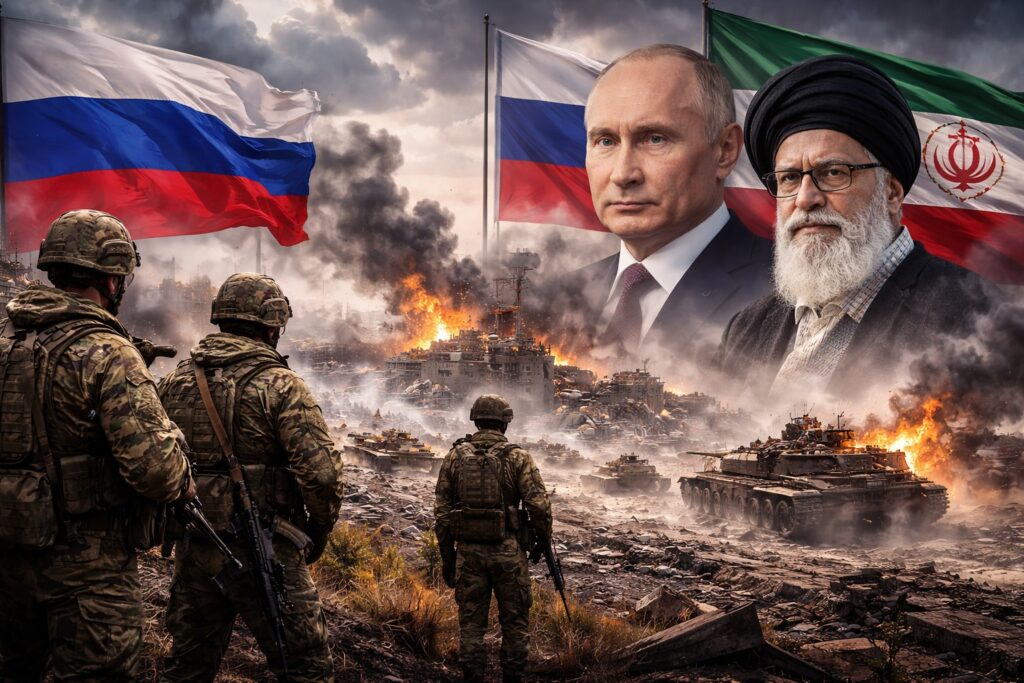
Eastern Europe Settles Into Prolonged Conflict
The Russia-Ukraine war has moved past the initial shock of invasion into the grim reality of sustained warfare. Neither side appears capable of delivering a decisive blow, and the front lines have largely stabilized into patterns reminiscent of World War I trench warfare. Ukrainian forces have proven remarkably resilient, but Russian military production has adapted to wartime demands, suggesting this conflict could persist for years rather than months.
International observers note that both Moscow and Kyiv have adjusted their strategies for a long campaign. Russia has shifted from rapid territorial gains to defensive positions, while Ukraine focuses on gradually reclaiming occupied territory through methodical operations. This transformation signals that Eastern Europe faces an extended period of instability.
Military Stalemate Defines the Current Phase
The war’s evolution into positional warfare reflects the limitations both sides face. Ukraine lacks the overwhelming force needed for rapid territorial liberation, while Russia cannot sustain the offensive operations required to capture major Ukrainian cities. Artillery exchanges and drone warfare have become the dominant forms of combat, creating a deadly but strategically indecisive dynamic.
Moscow Strengthens Middle Eastern Partnerships
Russia’s diplomatic support for Iran represents a calculated expansion of its geopolitical strategy. As tensions escalate between Iran and Western-backed Israel, Moscow has positioned itself as Tehran’s principal advocate on the international stage. This partnership extends beyond mere diplomatic statements to include military cooperation and intelligence sharing.
The timing of this alliance proves particularly significant. Russia seeks to diversify its international relationships as Western sanctions bite deeper into its economy, while Iran offers both an alternative market and a strategic partner capable of applying pressure on American interests in the Middle East.
Strategic Benefits Drive the Russia-Iran Partnership
Moscow gains several advantages through closer ties with Tehran. Iranian drones have already appeared on Ukrainian battlefields, demonstrating the practical military dimension of this cooperation. Additionally, Iran’s energy infrastructure and technical expertise provide Russia with alternatives to European markets and Western technology.
Coordinated Pressure Campaign Emerges Across Multiple Theaters
By maintaining its war in Ukraine while simultaneously backing Iran’s regional ambitions, Russia forces Western policymakers to divide their attention and resources. American military aid must now account for both Ukrainian defensive needs and Israeli security requirements, stretching defense budgets and weapons stockpiles.
This two-front challenge complicates NATO’s strategic planning significantly. European nations find themselves supporting Ukraine directly while also managing the indirect effects of Middle Eastern instability, including energy price volatility and refugee movements.
Energy Markets Face Renewed Manipulation
Russia has returned to using energy exports as a diplomatic weapon, this time through coordinated actions with Iran. Moscow’s recent decision to limit fuel exports, ostensibly to preserve domestic supply, coincides with Iranian threats to regional shipping lanes. Together, these actions create artificial scarcity in global energy markets.
The pattern mirrors Russia’s earlier use of natural gas supplies to pressure European nations, but now operates on a broader scale with Iranian participation. Oil prices respond to both actual supply disruptions and the mere threat of coordinated action between these two major energy producers.
Domestic Supply Claims Mask Broader Strategy
Russia halted fuel exports citing internal needs, but analysts recognize this as part of a broader economic warfare strategy. By restricting supply during periods of global tension, Moscow can influence energy prices while maintaining plausible justification for its actions.
Revisionist Powers Coordinate Global Challenges
The growing alignment between Russia, Iran, and China creates a loose but significant coalition of nations seeking to reshape the international order. While these countries maintain distinct national interests, their coordinated challenges to Western influence represent a fundamental shift in global dynamics.
China’s approach to Taiwan becomes more relevant as Russia and Iran occupy Western attention elsewhere. Beijing benefits from this distraction while contributing economic support that helps sustain both Russian and Iranian resistance to sanctions.
Ukraine Struggles for International Attention
As global focus shifts toward Middle Eastern developments, Ukraine faces the challenge of maintaining international support for its war effort. Media coverage increasingly divides between the ongoing conflict in Eastern Europe and more dramatic developments involving Israel and Iran.
This attention shift carries real consequences for Ukrainian military capabilities. Western military aid packages face competing demands, and public support for sustained assistance may weaken as other crises demand resources and political capital.
Coordinated Challenge to Western Alliance Systems
What emerges from these developments is not a series of isolated conflicts but a systematic test of Western alliance structures. Russia, Iran, and China each apply pressure at different points where Western commitments are strongest – European security, Middle Eastern stability, and Pacific trade routes respectively.
This coordinated approach represents a new form of strategic competition, one that relies on simultaneous crises rather than direct confrontation. As the Russia-Ukraine war drags on in Eastern Europe while Moscow signals support for Iran, Western policymakers must adapt to a world where multiple revisionist powers coordinate their challenges to the existing international order.