Azerbaijan Energy Influence — How Energy Resources Are Expanding Regional Power
For a country of roughly 10 million people with an economy smaller than many European cities, Azerbaijan punches well above its weight on the global stage. The reason is not military strength or diplomatic prestige in the traditional sense — it is energy. Azerbaijan’s ability to produce, transport, and reliably deliver oil and natural gas to markets hungry for supply has turned geography and geology into genuine geopolitical leverage. Understanding how that works reveals something broader about how medium-sized countries can shape regional power in the 21st century.

How Oil and Gas Exports Built Azerbaijan’s Geopolitical Foundation
Energy exports remain the core of Azerbaijan’s influence — and that position is deepening
Azerbaijan’s Caspian reserves have been commercially developed for over a century, but the modern phase began with the 1994 “Contract of the Century,” when the state oil company SOCAR partnered with a consortium of international energy firms to develop the Azeri-Chirag-Gunashli oil field. That single agreement set the trajectory for everything that followed.
Today, oil and gas account for roughly 90 percent of Azerbaijan’s export revenues and around half of government budget income. The Shah Deniz gas field, one of the largest in the world, has been particularly consequential. Phase two of its development, completed in 2018, opened the door to large-scale natural gas exports to Europe — a shift that moved Azerbaijan from oil producer to gas supplier with European reach.
This concentration creates vulnerability, as any resource-dependent economy knows. But it also creates strategic weight. Countries that need what Azerbaijan produces have strong incentives to maintain good relations with Baku, and Azerbaijan has used that reality with notable consistency.
Why Europe Turned to Azerbaijan as an Energy Partner
Diversification pressure opened a window that Azerbaijan was already positioned to fill
Europe’s urgency around energy diversification did not begin with Russia’s full-scale invasion of Ukraine in 2022, but that event accelerated it dramatically. For years, European policymakers had debated reducing dependence on Russian gas without fully acting on it. When that dependence became politically and strategically untenable, Azerbaijan was among the first alternative suppliers able to respond at scale.
In July 2022, the European Commission and Azerbaijan signed a memorandum of understanding to double Azerbaijani gas supplies to the EU by 2027 — targeting at least 20 billion cubic meters annually, up from around 8 billion in 2021. European Commission President Ursula von der Leyen traveled to Baku personally to sign the agreement, a signal of how seriously Brussels was taking the relationship.
This is not a perfect substitute for Russian supply volumes, which are far larger. But it represents a reliable, politically stable corridor that Europe is now structurally committed to expanding. For Azerbaijan, the timing could not have been more advantageous.
The Southern Gas Corridor and What It Actually Connects
A pipeline network crossing multiple borders reshaped the energy map of Eurasia
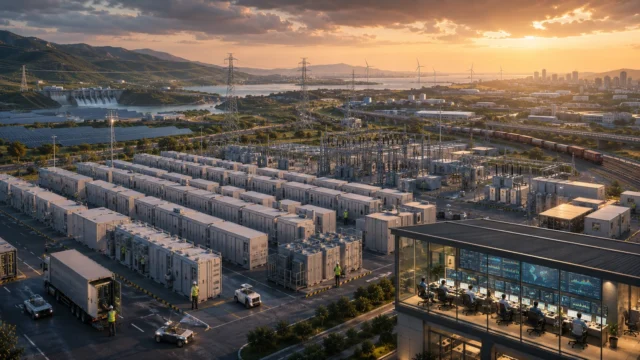
The Southern Gas Corridor is the physical infrastructure that makes Azerbaijan’s European energy role possible. It consists of three interconnected pipelines: the South Caucasus Pipeline running through Georgia, the Trans-Anatolian Pipeline (TANAP) crossing Turkey, and the Trans-Adriatic Pipeline (TAP) entering Europe through Greece, Albania, and into Italy.
The full corridor stretches over 3,500 kilometers and cost approximately $40 billion to develop. It began delivering gas to Europe in 2020. What makes it strategically significant is not just the volume it carries but the route it avoids — it bypasses Russia entirely. That design choice, made years before the 2022 crisis, now reads as prescient.
TAP has capacity to expand from 10 to 20 billion cubic meters per year, and discussions about further extensions into Central and Eastern Europe are ongoing. The corridor, in other words, is not a finished project but an evolving one.
Geography as Strategic Capital
Azerbaijan’s location at the intersection of three regions is not incidental — it is the strategy
Azerbaijan sits where the South Caucasus meets Central Asia and the broader Middle East. It shares a Caspian coastline with Kazakhstan and Turkmenistan, borders Iran to the south, Russia to the north, and connects westward through Georgia to Turkey and the Black Sea. That position has made it a natural transit hub for energy, trade, and people for centuries.
What changed in the post-Soviet era is that Azerbaijan developed the institutional capacity and investment relationships to monetize that geography at scale. The Baku-Tbilisi-Ceyhan oil pipeline, the Baku-Tbilisi-Kars railway, and now the Southern Gas Corridor are all expressions of the same logic: connect supply to demand across difficult terrain, and collect the strategic returns.
In a world increasingly focused on energy security, countries that function as reliable connectors tend to accumulate influence that exceeds what their raw economic size would predict. Azerbaijan has understood this and built around it.
How Energy Revenue Is Reshaping the Country Itself
Export income is funding infrastructure, but the distribution of that benefit raises longer-term questions
The State Oil Fund of Azerbaijan (SOFAZ), established in 1999, was designed to manage resource revenues responsibly and prevent the short-term consumption patterns that destabilize other commodity exporters. By 2023, SOFAZ held assets exceeding $50 billion — a substantial buffer for an economy of Azerbaijan’s scale.
Those resources have funded the expansion of Baku’s infrastructure, investments in transportation corridors, and social programs. The government has also pushed to develop non-oil sectors, with some success in agriculture and tourism, though the economy remains heavily tilted toward hydrocarbons.
The point is not that Azerbaijan has solved the resource-dependency challenge — it has not — but that it has managed energy revenues in a way that buys time and political stability. That stability, in turn, reinforces its credibility as a long-term partner for European buyers and international investors.
Energy as a Tool of Regional Diplomacy
Pipelines and supply agreements are reshaping Azerbaijan’s relationships with its neighbors
Azerbaijan’s energy infrastructure does not run through Azerbaijan alone. The Southern Gas Corridor passes through Georgia and Turkey, giving both countries transit revenues and deepening their economic ties with Baku. Turkey, which hosts the longest section of TANAP, has a direct interest in Azerbaijan’s continued gas export growth — a shared incentive that reinforces an already close political relationship.
With Georgia, the relationship is more asymmetric but no less real. Georgian transit fees and the economic activity generated by pipeline infrastructure have made energy cooperation a stabilizing element in Baku-Tbilisi relations, even as both countries navigate their own separate pressures from Moscow.
Azerbaijan has also pursued cautious engagement with Kazakhstan and Turkmenistan over potential trans-Caspian pipelines that could eventually route Central Asian gas westward through the same corridor. Those negotiations move slowly, complicated by legal questions over the Caspian seabed and Russian and Iranian opposition. But Baku’s interest in becoming not just an energy exporter but an energy transit hub for the wider region reflects an ambition that goes well beyond its current volumes.
How Azerbaijan’s Energy Networks Project Power Beyond Its Borders
Azerbaijan demonstrates what medium-sized countries can achieve when they combine natural resources with strategic infrastructure and consistent external partnerships. Its greatest asset may not be the reserves themselves — those are finite — but the infrastructure and relationships built around them. Pipelines are hard to reroute. Long-term supply contracts create durable political bonds. And a reputation for reliability, once established with energy-importing governments, tends to open doors in other areas of diplomacy.
The pattern matters beyond the Caucasus. As energy security moves higher on the agenda of governments across Europe and Asia, countries that sit at supply intersections and maintain stable export infrastructure accumulate a form of influence that is difficult to quantify but easy to observe in practice. Azerbaijan’s rising profile in EU energy discussions, its deepening ties with Turkey, and its growing relevance to Central Asian transit all point in the same direction.
The country is not a great power and does not aspire to be one in the conventional sense. What it has built instead is a specific, durable form of regional indispensability — and in the current period, that may be more useful.