China’s ‘Electrostate’ Rise Threatens to Redraw the Global Energy and Technology Order

The world’s economic center of gravity is shifting toward a new paradigm where electrons matter more than oil barrels. China has positioned itself at the heart of this transformation, building what analysts call an “electrostate” — a nation that derives geopolitical power from controlling the technologies that run on electricity rather than fossil fuels. This shift represents more than just an industrial transition; it signals a fundamental rewiring of global influence that challenges decades of energy-based geopolitics.

China's 'Electrostate' Rise Threatens to Redraw the Global Energy and Technology Order
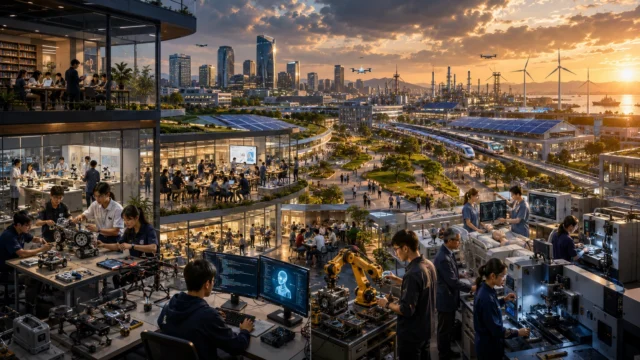
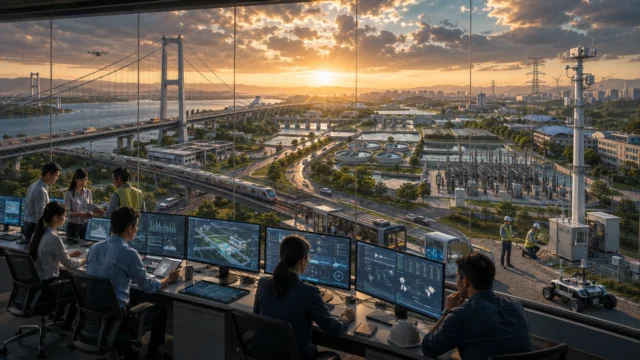
China expanding renewable energy infrastructure with solar panels, wind turbines, and advanced industry, symbolizing its rise as a global electrostate reshaping energy and technology markets.

China’s Dominance of the Electric Technology Stack

China has systematically built control over what experts call the “electric stack” — the interconnected technologies that define modern digital life. Electric vehicles, commercial drones, industrial robots, lithium-ion batteries, and artificial intelligence systems all depend on electrical power and the components China now produces at scale.

The numbers tell the story clearly. China manufactures roughly 80% of the world’s solar panels, controls 60% of global wind turbine production, and produces nearly three-quarters of all lithium-ion batteries. Chinese companies like BYD have become the world’s largest EV manufacturers, while firms such as DJI control an estimated 70% of the global consumer drone market.

This isn’t accidental industrial policy — it represents decades of coordinated investment in the technologies that power the 21st-century economy. While other nations focused on protecting legacy industries, China built the manufacturing base for tomorrow’s infrastructure.

Beijing’s Integrated Approach to Technology Leadership

Unlike Western countries that often treat different technologies as separate sectors, China approaches the electric stack as an integrated system. Battery technology developed for EVs flows into grid storage solutions. Manufacturing expertise in solar panels translates to advantages in semiconductor production. This systems thinking has created synergies that compound China’s competitive advantages across multiple industries simultaneously.

America’s Petrostate Strategy Creates Strategic Vulnerability

The contrast between Chinese and American energy strategies has become stark. While Beijing offers emerging markets 21st-century infrastructure at competitive prices, Washington continues promoting 20th-century energy exports. The United States has become the world’s largest oil and gas producer, cementing its role as a petrostate precisely when the global economy is beginning to electrify.

This strategic divergence has consequences beyond energy markets. American companies face higher costs for electric vehicle components, solar installations, and battery storage systems because the domestic supply chains remain underdeveloped. Meanwhile, Chinese manufacturers benefit from economies of scale that make their products increasingly difficult to compete against on price.

The Infrastructure Export Competition

China’s Belt and Road Initiative exemplifies this technological diplomacy. Rather than simply exporting commodities, China exports entire infrastructure systems — solar farms, wind installations, electric bus fleets, and the financing to make them possible. These projects create long-term dependencies that extend far beyond simple trade relationships.

The United States, by contrast, primarily exports liquefied natural gas and crude oil — commodities that developing nations increasingly view as transitional at best. This leaves American influence tied to resources that may become less valuable over time.

Emerging Markets Choose Chinese Technology Solutions

Developing nations face a clear choice between energy systems, and the data shows they’re increasingly selecting Chinese options. Countries across Southeast Asia, Africa, and Latin America are installing Chinese-manufactured solar panels, buying Chinese electric buses for public transit, and implementing Chinese-designed smart city technologies.

This preference reflects both economic and practical considerations. Chinese electric infrastructure often costs 30-50% less than Western alternatives while arriving with financing packages that developing nations can actually afford. More importantly, these technologies represent the future rather than expensive investments in soon-to-be-obsolete fossil fuel systems.

Brazil provides a concrete example. The country has installed over 10 gigawatts of Chinese solar capacity while simultaneously purchasing Chinese electric buses for major cities. These aren’t just commercial transactions — they’re building blocks of long-term technological dependency.

The Network Effect of Chinese Standards

As more countries adopt Chinese electric technologies, Beijing’s technical standards become global defaults. This creates network effects where compatibility with Chinese systems becomes necessary for international trade and cooperation. The result is technological influence that extends far beyond any individual product or market.

Critical Minerals Replace Oil as Strategic Resources

The shift toward electric technologies has fundamentally altered which raw materials matter for national power. China recognized this transition early and systematically secured control over the critical minerals that electric technologies require.

Chinese companies now control approximately 85% of global rare earth processing capacity and hold significant stakes in lithium mines across Australia, Chile, and Africa. The country processes roughly 65% of the world’s graphite — essential for battery anodes — and refines most of the cobalt that electric vehicle batteries require.

This mineral control creates chokepoints that didn’t exist in the oil-dominated era. Unlike petroleum, which can be sourced from dozens of countries, many critical minerals have highly concentrated supply chains that China has learned to dominate through strategic investments rather than direct ownership.

Supply Chain Vulnerabilities Emerge

The concentration of critical mineral processing in China creates new strategic vulnerabilities for other nations. When China briefly restricted rare earth exports to Japan in 2010, it demonstrated how quickly these dependencies can become geopolitical weapons. Similar dynamics now exist across dozens of materials essential for electric vehicles, wind turbines, and advanced electronics.

Europe Faces Chinese Industrial Overcapacity

European manufacturers are experiencing the full impact of Chinese industrial capacity in electric technologies. What began as competition in electric vehicles has expanded into solar panels, wind turbine components, and semiconductor manufacturing. Chinese companies can often sell products in European markets at prices below what European manufacturers pay for raw materials.

This isn’t simply unfair competition — it reflects genuine economies of scale and manufacturing efficiency that Chinese companies have developed through massive domestic markets and coordinated industrial policy. European policymakers face difficult choices between protecting domestic industries and providing consumers with affordable clean technology.

The European Union has begun implementing tariffs on Chinese electric vehicles and solar panels, but these measures create their own problems. Higher prices slow the adoption of clean technologies that Europe needs to meet climate goals, while retaliatory measures from China can hurt European companies that depend on Chinese markets.

The Innovation vs. Manufacturing Divide

Europe remains strong in research and development for clean technologies, but China dominates manufacturing and deployment. This creates an uncomfortable dynamic where European innovations often become Chinese products that are then sold back to European consumers at prices European manufacturers cannot match.

America’s AI Advantage Meets China’s Energy Infrastructure

The artificial intelligence race reveals how China’s electrostate strategy could overcome American technological leadership. While American companies like OpenAI and Google create the most advanced AI models, deploying these systems at global scale requires enormous amounts of electricity and the infrastructure to deliver it reliably.

China’s dominance in solar panels, batteries, and grid infrastructure positions the country to power AI data centers more cheaply than competitors. As AI becomes more energy-intensive, the ability to provide clean, affordable electricity could matter more than having the best algorithms.

This dynamic suggests that China might win the global AI market not by building better models, but by making AI deployment more economical and scalable than American competitors can achieve.

The implications extend beyond commercial competition. Nations choosing Chinese AI infrastructure will likely find their digital systems increasingly integrated with Chinese technology standards and potentially Chinese data collection capabilities. This represents a new form of technological dependency that could reshape global information flows and digital sovereignty for decades to come.