Energy Security — Why Reliable Power Has Become a Geopolitical Priority in the 21st Century

The disruption of energy supplies has toppled governments, reshaped alliances, and triggered economic crises throughout modern history. Today, energy security — why reliable power has become a geopolitical priority — extends far beyond traditional concerns about oil embargoes or natural gas shortages. Nations now recognize that energy security encompasses electricity grids, renewable infrastructure, critical minerals, and storage systems that underpin economic competitiveness and national stability.

Energy security affects every country regardless of size or ideology. Nations that build diversified, resilient energy systems position themselves better to navigate economic uncertainty, technological change, and future geopolitical shocks. This shift reflects a fundamental evolution from viewing energy as a sector-specific issue to treating it as a cornerstone of national strategic planning.

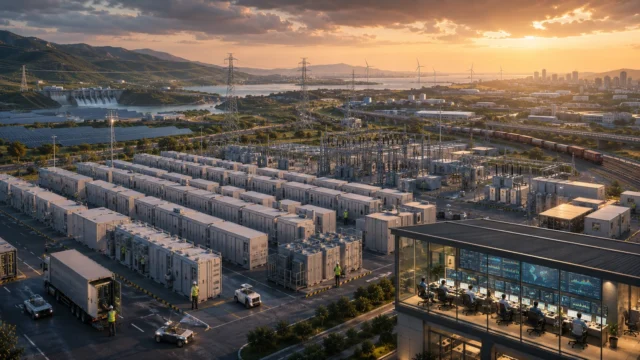
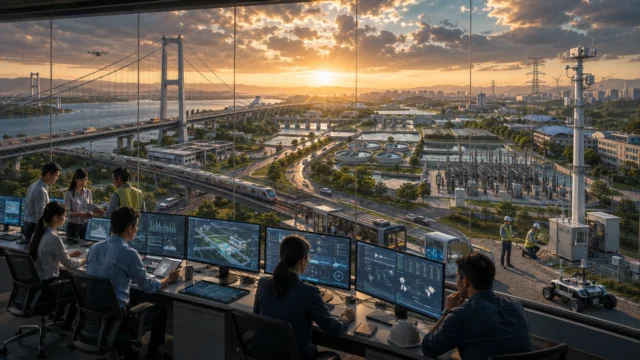
Engineers oversee a modern energy network linking power grids, pipelines, ports, renewable energy facilities, and storage infrastructure, illustrating the critical systems that support long-term energy resilience and reliability.
Energy security depends not only on fuel supplies but also on the infrastructure that connects production, storage, and consumption. Investments in modern grids, transmission networks, ports, and energy storage systems are increasingly viewed as strategic assets that strengthen resilience against disruptions while supporting the transition to more diverse energy sources.

Energy Security Encompasses More Than Production Capacity

Modern energy security requires reliable access, transportation, storage, and distribution networks that function as integrated systems. Production capacity means little if pipelines face sabotage, storage facilities lack adequate reserves, or distribution networks cannot handle peak demand periods.

The 2021 Texas winter storm demonstrated how distribution failures can cripple entire regions despite adequate generation capacity. Similarly, the 2022 attacks on Nord Stream pipelines showed how transportation infrastructure vulnerabilities can reshape European energy markets overnight. These incidents highlight that energy security depends on system-wide resilience rather than just upstream production volumes.

Countries now evaluate energy security through multiple dimensions: physical availability, economic affordability, technological accessibility, and environmental sustainability. Each component requires different policy approaches and investment priorities.

Government Strategies Focus on Supply Chain Resilience

Reducing vulnerability to supply disruptions has emerged as a primary strategic objective for policymakers worldwide. Governments recognize that energy dependencies can become leverage points for hostile actors during geopolitical tensions.

The European Union’s REPowerEU plan, launched after Russia’s invasion of Ukraine, exemplifies this approach. The plan aims to eliminate Russian fossil fuel imports by 2030 through accelerated renewable deployment, energy efficiency measures, and supply diversification. This represents a fundamental shift from prioritizing cost optimization to emphasizing supply security.

Policy Tools for Building Resilience

Strategic petroleum reserves, mandatory storage requirements, and domestic production incentives have become standard policy instruments. The United States maintains approximately 714 million barrels in its Strategic Petroleum Reserve, while the International Energy Agency coordinates emergency response mechanisms among member countries.

Governments also invest in redundant supply routes and backup systems. Japan’s energy policy emphasizes multiple LNG suppliers and flexible contract structures following the 2011 Fukushima disaster, while Germany accelerated LNG terminal construction to reduce pipeline dependency.

Diversification Strategies Reduce Dependency Risks

Countries actively seek multiple energy sources, suppliers, and transportation routes to minimize single points of failure. This diversification extends beyond fossil fuels to include renewable energy sources, battery technologies, and critical mineral supplies.

India’s energy strategy illustrates comprehensive diversification. The country imports oil from over 85 countries, invests heavily in solar manufacturing capacity, and secures lithium mining rights in Argentina and Chile. This approach spreads risk across different energy types, suppliers, and geographic regions.

China similarly pursues diversification through its Belt and Road Initiative energy projects, domestic renewable expansion, and strategic commodity stockpiling. Despite being the world’s largest renewable energy producer, China maintains diverse fossil fuel import sources and invests in overseas energy assets.

Critical Infrastructure Supports Long-term Energy Resilience

Pipelines, power grids, ports, and storage facilities form the backbone of energy security systems. Infrastructure investments require decades-long planning horizons and substantial capital commitments, making them both strategic assets and potential vulnerabilities.

Smart grid technologies enable more flexible energy distribution and faster recovery from disruptions. The U.S. Department of Energy estimates that grid modernization could reduce power outage costs by $49 billion annually while enabling higher renewable energy integration.

Port infrastructure increasingly determines energy trade flows. Qatar’s North Field expansion will require new LNG export terminals, while importing countries invest in regasification facilities and storage tanks. These infrastructure decisions shape energy relationships for generations.

Grid Integration Challenges

Renewable energy integration demands grid flexibility and storage capacity. Denmark’s experience managing 50% renewable electricity demonstrates both opportunities and challenges. The country exports excess wind power during peak generation periods while importing electricity during calm weather, requiring sophisticated grid management and regional cooperation.

Clean Energy Transition Creates Strategic Complexities

The shift toward cleaner energy systems introduces new dependencies while potentially reducing others. Solar panels require rare earth elements, wind turbines need specific steel alloys, and battery production depends on lithium, cobalt, and nickel supplies.

China currently dominates critical mineral processing, controlling approximately 85% of rare earth refining capacity. This concentration creates potential supply vulnerabilities as countries transition away from fossil fuel dependencies. The United States, European Union, and allies respond by developing domestic processing capabilities and securing alternative supply sources.

Renewable energy systems also require different infrastructure investments and operational approaches. Solar and wind generation patterns differ significantly from fossil fuel plants, demanding flexible backup power, enhanced transmission networks, and energy storage systems.

Affordable Energy Access Drives Industrial Competitiveness

Reliable and cost-effective energy supplies directly influence industrial location decisions, manufacturing costs, and innovation capacity. Countries with abundant, cheap energy often attract energy-intensive industries like aluminum smelting, chemical production, and data centers.

The U.S. shale energy boom attracted over $300 billion in chemical industry investments between 2010 and 2020, creating manufacturing advantages through lower feedstock costs. Similarly, Middle Eastern countries leverage low-cost energy to develop petrochemical industries and energy-intensive manufacturing.

Energy costs affect broader economic competitiveness beyond heavy industry. Small businesses, residential consumers, and service sectors all depend on affordable electricity and fuel supplies. Energy price volatility can trigger inflation, reduce consumer spending power, and undermine economic growth.

Reliable Energy Access Remains Central to National Power

Energy security continues to influence economic strength and geopolitical influence in fundamental ways. Countries with secure, affordable energy supplies maintain economic stability during global disruptions while those facing energy shortages often experience economic contraction and social unrest.

Energy exporters like Saudi Arabia, Norway, and Russia use energy revenues to fund government operations, military capabilities, and international influence. Energy importers must balance supply security with economic efficiency while managing geopolitical relationships with supplier countries.

The ongoing energy transition will likely reshape these power dynamics without eliminating energy’s strategic importance. Countries that successfully manage the transition while maintaining energy security will gain competitive advantages, while those that fail to adapt may face economic decline and reduced international influence. Energy security remains a foundation of national power precisely because modern societies cannot function without reliable, affordable energy systems.