Global Aviation Faces New Pressure — Airspace Restrictions Reshape International Flight Networks

Airlines are discovering just how quickly geopolitical tensions can transform their most basic operational assumptions. What began as regional conflicts has rapidly evolved into a worldwide aviation challenge, forcing carriers to abandon established routes and confront the uncomfortable reality that global air travel operates at the mercy of international politics.

The scale of current airspace closures represents something unprecedented in commercial aviation’s modern era. Multiple conflict zones now stretch across traditional flight corridors, while diplomatic disputes have closed additional airspace to specific carriers. Aviation is becoming an increasingly fragile part of the global economy because it depends heavily on political stability and international coordination—a dependency that recent events have exposed with uncomfortable clarity.

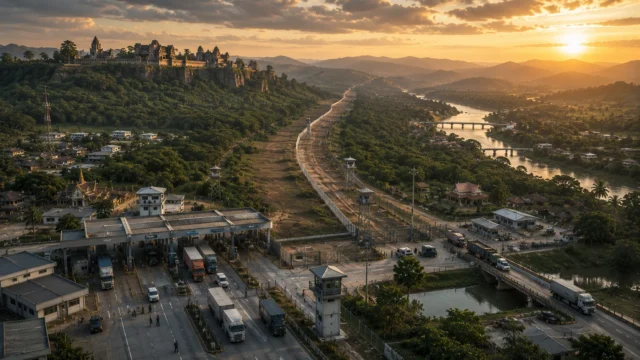
Global aviation routes affected by airspace restrictions and geopolitical tensions, illustrating changes in international flight networks and travel connectivity.
As geopolitical risks grow, global aviation networks are adapting to a new era of restricted airspace and operational uncertainty.

Airspace Closures Multiply Across Key Flight Corridors

The expansion of restricted airspace has fundamentally altered how airlines plan international routes. Russia’s closure of its airspace to Western carriers, combined with ongoing conflicts in the Middle East and tensions across various regional boundaries, has eliminated flight paths that airlines relied on for decades.

European carriers flying to Asia now face detours that add thousands of miles to previously direct routes. Lufthansa’s Frankfurt-to-Seoul flights, which once crossed Russian territory in roughly 10 hours, now require southern routes through Central Asia that extend flight times significantly. Similar disruptions affect carriers across multiple continents, forcing operational teams to redesign route networks they assumed were permanent.

Conflict Zones Create Permanent Route Changes

Unlike temporary weather-related diversions, geopolitical airspace restrictions carry an element of permanence that challenges traditional airline planning. Carriers cannot simply wait for conditions to improve; they must restructure their entire approach to international connectivity.

The aviation industry’s response reveals how interconnected globalization truly is—even regional conflicts can rapidly affect worldwide transportation systems. Flight paths that seemed geographically distant from conflict zones now require careful risk assessment and alternative planning.

Operating Costs Surge as Airlines Navigate Longer Routes

Extended flight paths translate directly into higher operational expenses that airlines struggle to absorb. Fuel consumption increases substantially when aircraft must fly thousands of additional miles, while crew scheduling becomes more complex as flight times extend beyond standard work periods.

Airlines report fuel cost increases of 20-40% on affected routes, depending on the specific diversions required. These additional expenses cannot always be passed directly to passengers, particularly on competitive routes where multiple carriers face similar challenges.

Aircraft Utilization Patterns Shift Dramatically

Longer flight times mean airlines can complete fewer rotations with the same aircraft, effectively reducing their fleet capacity without removing any planes from service. This hidden capacity reduction forces carriers to reconsider their entire network strategies and, in some cases, abandon routes that are no longer economically viable under current restrictions.

International Connectivity Becomes More Complex and Fragile

The hub-and-spoke model that defines modern aviation faces new stress tests as traditional connection points become less accessible. Airlines that built their strategies around specific geographic advantages now find their competitive positions altered by factors entirely outside their control.

Passenger connections that once seemed routine now require multiple stops or entirely different routing strategies. Business travelers accustomed to efficient point-to-point service discover that geopolitics has inserted new complexity into their most basic travel needs.

Airlines Develop New Risk Assessment Frameworks

Carriers are establishing dedicated teams to monitor geopolitical developments and assess their potential impact on flight operations. This represents a significant shift from previous decades, when route planning focused primarily on commercial and technical considerations.

Risk assessment now includes political stability analysis, diplomatic relationship monitoring, and contingency planning for rapid airspace closures. Airlines invest in scenario planning that would have seemed unnecessary during aviation’s more predictable expansion period.

Insurance and Safety Protocols Evolve

Aviation insurers are recalibrating their risk models to account for geopolitical volatility, leading to higher premiums for routes that cross or approach sensitive regions. Safety protocols now include considerations that extend far beyond weather and mechanical factors.

Air Cargo Networks Face Mounting Disruption

Express cargo services, which depend on precise timing and established routes, experience particular strain under current restrictions. Packages that once moved predictably across continents now face delays and routing uncertainties that complicate supply chain planning.

Major cargo carriers like FedEx and UPS have redesigned their Asian networks to accommodate Russian airspace restrictions, while regional conflicts create additional complications for time-sensitive shipments.

Manufacturing Supply Chains Adapt to Aviation Constraints

Companies that rely on just-in-time delivery systems are discovering that aviation disruptions can cascade quickly through their production schedules. Electronics manufacturers, pharmaceutical companies, and automotive suppliers now build additional buffer time into their logistics planning to account for air cargo uncertainties.

Strategic Aviation Hubs Gain Competitive Advantages

Certain countries benefit substantially from shifting flight patterns as airlines seek alternative routes and connection points. Middle Eastern carriers, already positioned as connecting hubs between Europe and Asia, find their geographic advantages enhanced by competitors’ routing difficulties.

Turkey’s strategic location has become increasingly valuable as airlines seek alternatives to traditional European-Asian corridors. Turkish Airlines reports growing transit traffic as other carriers struggle with longer routing requirements.

Regional Power Dynamics Shift in Aviation Markets

Countries with stable airspace and strategic locations can leverage their advantages to attract airline partnerships and investment. This creates new forms of soft power influence, where aviation access becomes a diplomatic and economic tool.

Political Tensions Increasingly Shape Global Mobility Patterns

The current situation demonstrates that international transportation networks operate with less resilience than many assumed. Global aviation faces new pressure as airspace restrictions reshape international connectivity in ways that may prove lasting rather than temporary.

Airlines once operated under the assumption that commercial aviation existed somewhat apart from geopolitical tensions. Recent developments suggest this assumption no longer holds, forcing the industry to confront a future where political considerations may permanently influence route planning and operational strategy.

The implications extend beyond individual carrier strategies to question fundamental assumptions about global connectivity. If aviation networks can be disrupted this extensively by regional conflicts, the broader architecture of globalization may prove more fragile than its proponents anticipated.