India and Europe Build a New Strategic Corridor — A Quiet Alliance Begins to Take Shape

While global attention remains fixed on military tensions and trade wars, India and Europe are quietly constructing what may become one of the most consequential strategic partnerships of the decade. This emerging alliance operates through economic corridors, technology transfers, and supply chain integration rather than traditional defense pacts. The partnership reflects a shared recognition that economic security has become inseparable from national security, driving both regions to forge deeper ties across critical sectors from semiconductors to critical minerals.

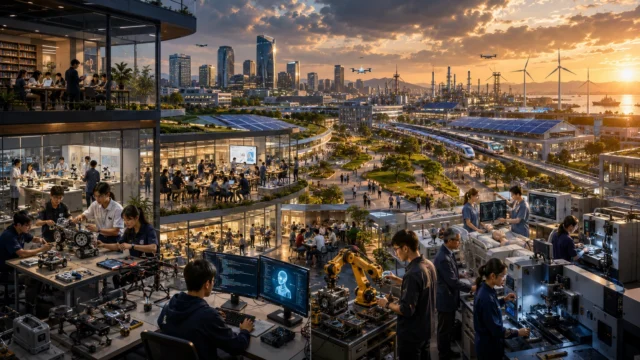
India and Europe strengthening strategic cooperation through trade corridors, infrastructure, clean energy projects, and long-term economic connectivity.
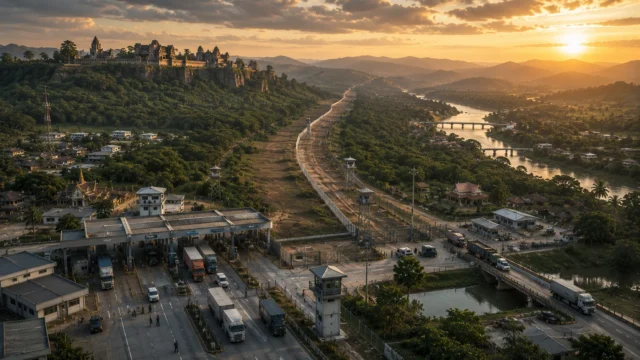
India and Europe are building a new strategic corridor aimed at strengthening trade, supply chains, energy cooperation, and economic resilience across continents.

India and Europe Deepen Strategic Cooperation Across Key Sectors

Both regions are rapidly expanding collaboration in technology, energy, and supply chain security, moving beyond diplomatic pleasantries toward concrete economic integration. The European Union’s Trade and Cooperation Agreement with India, signed in 2021, has accelerated joint initiatives in renewable energy, digital infrastructure, and manufacturing partnerships.

European companies are establishing manufacturing bases in India while Indian firms gain access to European research facilities and markets. This two-way flow creates interdependencies that strengthen both regions against external economic pressure. The timing reflects growing concerns about over-reliance on single suppliers and vulnerable trade routes that recent global disruptions have exposed.

Institutional Frameworks Drive Practical Results

The India-EU Strategic Partnership has produced tangible outcomes including the Clean Energy and Climate Partnership, which channels European green technology expertise to Indian renewable energy projects. Similarly, the Digital Partnership launched in 2022 focuses on 5G networks, artificial intelligence development, and cybersecurity cooperation.

These frameworks move beyond traditional trade agreements by embedding strategic considerations into economic planning. Both sides recognize that technological capabilities and energy security directly influence geopolitical autonomy.

Critical Minerals Access Emerges as Partnership Priority

Strategic resource security has become a central pillar of India-Europe cooperation, with both regions seeking alternatives to concentrated mineral supply chains. India possesses significant reserves of lithium, rare earth elements, and other materials essential for renewable energy and electronics manufacturing, while Europe offers advanced processing technologies and sustainable extraction methods.

The European Critical Raw Materials Act, enacted in 2023, specifically identifies India as a key partner for diversifying mineral supplies. Indian mining companies are partnering with European firms to develop processing capabilities within India, reducing the need to export raw materials for value-added processing elsewhere.

This resource partnership extends beyond simple extraction. Joint research initiatives focus on recycling technologies, substitute materials, and more efficient use of scarce minerals. The collaboration creates a closed-loop system that benefits both regions while reducing dependence on geopolitically sensitive suppliers.

New Trade Routes Strengthen Economic Resilience

Connectivity projects between India and Europe aim to create more reliable and resilient trade corridors, reducing vulnerability to disruption of existing routes. The India-Middle East-Europe Economic Corridor, announced at the 2023 G20 summit, represents the most ambitious of these initiatives.

This corridor would connect Indian ports to European markets through the Arabian Peninsula, bypassing traditional chokepoints and reducing transit times. The project includes railway networks, ports, and digital infrastructure that would fundamentally alter trade flows between the regions.

Beyond physical infrastructure, both sides are developing digital trade platforms and streamlined customs procedures that reduce transaction costs and processing delays. These efficiency gains make the India-Europe trade relationship more competitive against alternative partnerships.

Technology Partnerships Accelerate Innovation and Production

Artificial intelligence, semiconductors, and digital infrastructure have become focal points for India-Europe technological cooperation, with joint development programs producing commercially viable innovations. The EU-India Trade and Technology Council, established in 2023, coordinates these efforts across both government and private sector initiatives.

European semiconductor companies are establishing design centers in Indian technology hubs while Indian software firms gain access to European manufacturing and research facilities. This creates integrated production chains that combine European hardware expertise with Indian software capabilities.

The partnership extends to emerging technologies including quantum computing, biotechnology, and advanced materials. Joint research programs receive funding from both European Horizon Europe initiatives and Indian government technology programs, creating shared intellectual property and commercial applications.

Economic Security Considerations Shape Policy Frameworks

Strategic thinking increasingly influences trade and investment decisions as both regions prioritize economic resilience alongside efficiency. India’s Production Linked Incentive schemes specifically encourage European manufacturing investment in strategic sectors, while European regulations favor Indian suppliers who meet sustainability and security standards.

This approach represents a shift from purely market-driven trade toward strategically guided economic integration. Both sides accept higher costs in exchange for more reliable supply chains and reduced vulnerability to economic coercion.

Financial cooperation supports this strategic approach through dedicated investment funds and risk-sharing mechanisms for projects with strategic importance. The European Investment Bank has committed substantial funding for Indian infrastructure projects that strengthen bilateral economic ties.

Alternative Supply Chains Challenge Established Dependencies

The India-Europe partnership actively seeks to reduce reliance on vulnerable supply chains by creating new production networks and trade relationships. Manufacturing partnerships in sectors from pharmaceuticals to electronics establish alternative sources for critical products.

Indian pharmaceutical companies already supply significant portions of European generic drug markets, while European automotive manufacturers are integrating Indian component suppliers into their production systems. These relationships create redundancy that increases resilience against supply disruptions.

The partnership also develops alternative shipping routes and logistics networks that reduce dependence on potentially vulnerable passages. Container shipping agreements and port development projects create backup options for critical trade flows.

A Strategic Bloc Takes Shape Beyond Traditional Economics

Cooperation between India and Europe is expanding into broader geopolitical coordination, suggesting the emergence of a long-term strategic alignment that transcends immediate economic interests. Joint positions on global governance, climate policy, and technology standards indicate shared values and strategic perspectives.

This partnership remains underestimated in current geopolitical analysis. While headlines focus on military conflicts and alliance structures, economic corridors like the India-Europe relationship may prove more influential in reshaping global power distribution. The partnership creates alternatives to existing economic arrangements without requiring dramatic political realignments.

The strategic corridor between India and Europe represents patient institution-building rather than dramatic announcements. Its impact will likely become apparent gradually as trade flows shift, technological capabilities develop, and alternative supply chains mature. This quiet alliance may ultimately prove more durable than partnerships built primarily on shared threats or immediate political alignment.