Semiconductor Demand Surges Despite Geopolitical Risks — The AI Boom Changes Everything

Global semiconductor demand is reaching unprecedented levels, driven by an artificial intelligence revolution that is reshaping entire industries. Even as trade tensions and supply chain disruptions create ongoing uncertainty, chip sales continue to surge, revealing the fundamental role these components now play in economic competition. The parallel between semiconductors today and oil in the 20th century becomes increasingly clear: control over chip production and supply chains represents a strategic advantage that nations cannot afford to ignore.

AI Applications Drive Unprecedented Chip Demand

Artificial intelligence workloads require computational power that far exceeds traditional computing needs, creating a boom in specialized semiconductor demand. Advanced AI models, particularly large language models and machine learning applications, depend on high-performance graphics processing units (GPUs) and application-specific integrated circuits (ASICs) that can handle massive parallel processing tasks.

NVIDIA's data center revenue jumped 427% year-over-year in Q3 2023, reaching $14.5 billion, largely due to AI chip demand from major cloud providers and enterprises. This surge reflects broader market dynamics as companies across sectors integrate AI capabilities into their operations.

Enterprise AI Adoption Accelerates Hardware Requirements

Companies implementing AI solutions face immediate hardware bottlenecks. Training sophisticated AI models requires clusters of specialized chips working in coordination, while inference—running trained models to generate outputs—demands consistent access to high-performance computing resources. This dual requirement creates sustained demand pressure that traditional semiconductor cycles have not experienced.

Geopolitical Tensions Challenge Global Supply Networks

Despite robust demand, semiconductor supply chains face persistent geopolitical headwinds. U.S. export controls on advanced chip technology to China, implemented in October 2022 and expanded in 2023, have forced companies to navigate complex compliance requirements while maintaining production schedules.

Taiwan Semiconductor Manufacturing Company (TSMC), which produces roughly 90% of the world's most advanced chips, sits at the center of these tensions. The company's dominant position in cutting-edge node production makes it a critical chokepoint for global technology supply chains.

Export Controls Reshape Industry Partnerships

Recent U.S. restrictions on semiconductor manufacturing equipment exports have particularly affected companies like Applied Materials and ASML, forcing them to restructure their global operations. ASML, the Dutch company that produces extreme ultraviolet (EUV) lithography machines essential for advanced chip production, has had to limit sales to Chinese customers despite strong demand from that market.

Strategic Manufacturing Investments Reshape Global Capacity

Governments worldwide are prioritizing domestic semiconductor production through substantial financial commitments. The U.S. CHIPS and Science Act allocated $52 billion for semiconductor manufacturing and research, while the European Union's Chips Act targets €43 billion in public and private investment by 2030.

These initiatives aim to reduce dependence on concentrated Asian production, particularly in Taiwan and South Korea. Intel's planned $20 billion Ohio fabrication facility and TSMC's $40 billion Arizona investment represent concrete steps toward geographic diversification of advanced chip manufacturing.

National Security Considerations Drive Policy Decisions

The strategic nature of semiconductor manufacturing has elevated chip policy to national security priority levels. Countries recognize that control over advanced chip production directly impacts military capabilities, economic competitiveness, and technological sovereignty. This understanding drives investment decisions that prioritize supply chain resilience over pure economic efficiency.

Data Infrastructure Expansion Fuels Sustained Growth

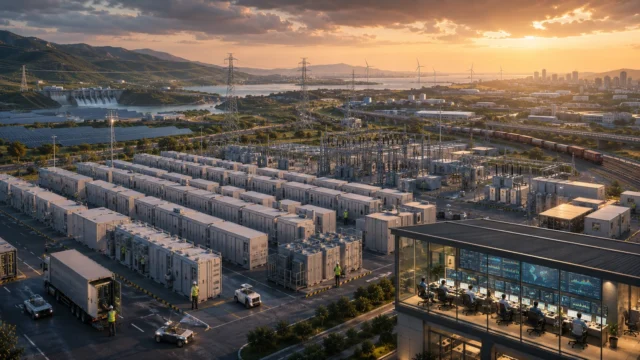
The rapid expansion of data center capacity to support AI applications creates sustained semiconductor demand beyond initial model development. Cloud providers are building specialized AI infrastructure that requires different chip architectures than traditional server applications.

Microsoft's partnership with OpenAI has driven massive data center investments, with the company planning to spend over $50 billion on AI infrastructure through 2024. Similar commitments from Google, Amazon, and Meta demonstrate how AI applications are reshaping data center hardware requirements.

Edge Computing Adds New Demand Vectors

AI deployment increasingly occurs at the network edge, requiring distributed computing infrastructure with specialized chips optimized for power efficiency and real-time processing. This trend multiplies demand across different semiconductor categories, from high-performance data center processors to efficient edge AI chips.

Developing Nations Position for Semiconductor Opportunities

Countries previously peripheral to semiconductor manufacturing are developing strategies to participate in the evolving industry structure. India's semiconductor mission targets $10 billion in manufacturing incentives, while Vietnam and Malaysia are attracting assembly and testing operations as companies diversify their supply chains.

These emerging players focus on specific segments rather than attempting to replicate the full semiconductor ecosystem. Their strategies often emphasize partnerships with established companies seeking geographic diversification while building domestic technical capabilities.

Technological Leadership Drives Competitive Dynamics

Competition for advanced semiconductor capabilities extends beyond manufacturing to encompass design, materials science, and manufacturing equipment. The ability to produce chips at the most advanced process nodes—currently 3-nanometer and below—determines leadership in high-performance computing applications.

China's substantial investments in domestic semiconductor capabilities, despite export restrictions, demonstrate the strategic importance nations place on technological self-sufficiency. The country's National Integrated Circuit Industry Investment Fund has committed over $100 billion to developing domestic chip capabilities since 2014.

The Semiconductor Sector Enters an AI-Driven Supercycle

Current semiconductor demand patterns suggest the industry has entered a prolonged growth cycle tied directly to AI expansion rather than traditional consumer electronics cycles. This AI supercycle differs from previous semiconductor booms because it is driven by fundamental computational requirements rather than cyclical consumer demand.

The infrastructure necessary to support widespread AI adoption—from training facilities to deployment networks—requires sustained semiconductor investment over multiple years. Unlike smartphone or PC cycles that eventually saturate, AI applications continue expanding into new sectors and use cases, creating persistent demand for advanced computing capabilities.

This transformation positions semiconductors as the foundation of both economic growth and geopolitical competition in the coming decade. Nations that secure reliable access to advanced chip production and supply chains will hold significant advantages in the global competition for technological leadership and economic influence.