South China Sea Tensions Rise — A Strategic Flashpoint in Global Trade
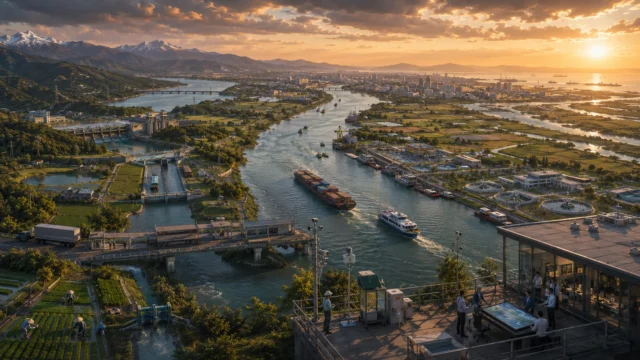
A cargo ship carrying electronics from Shanghai to Rotterdam navigates through waters claimed by four different nations, each with naval vessels nearby. This scene, increasingly common in the South China Sea, captures how geography shapes global power in the 21st century. Control over these strategic waterways directly translates into economic and strategic influence, making this region ground zero for mounting tensions that could reshape international trade.
The South China Sea has become more than a territorial dispute—it represents a fundamental test of how rising powers challenge established order while $3.4 trillion in annual trade hangs in the balance.

Critical Shipping Lanes Face Growing Pressure
The South China Sea functions as the world’s most vital maritime highway, channeling one-third of global shipping traffic through its narrow passages. Container vessels, oil tankers, and bulk carriers squeeze through chokepoints like the Malacca Strait, connecting Asian manufacturing hubs with markets across Europe and the Americas.
This geographic bottleneck gives whoever controls these waters enormous leverage over global commerce. Chinese officials frequently emphasize their role as guardians of regional stability, while other nations worry about potential restrictions on free navigation. The math is stark: alternative routes around Australia would add weeks and significant costs to shipping schedules, making businesses worldwide vulnerable to any disruption.
Recent data shows container traffic through the region increased 12% in 2023, driven by post-pandemic supply chain adjustments and growing intra-Asian trade. Major shipping companies now factor geopolitical risks into route planning, a shift that reflects how maritime geography increasingly intersects with national strategy.
Overlapping Claims Create Dangerous Friction
Six governments assert competing territorial rights across the South China Sea, creating a patchwork of disputed zones where misunderstandings can quickly escalate. China’s nine-dash line encompasses roughly 85% of the sea, overlapping with exclusive economic zones claimed by Vietnam, the Philippines, Malaysia, Brunei, and Taiwan.
The Spratly Islands exemplify these complex disputes. Vietnam occupies 29 features, the Philippines holds nine, Malaysia controls five, and China maintains seven artificial islands built since 2013. Each nation justifies its claims through historical precedent, international law, or effective occupation, making compromise difficult.
Island Building Changes the Strategic Landscape
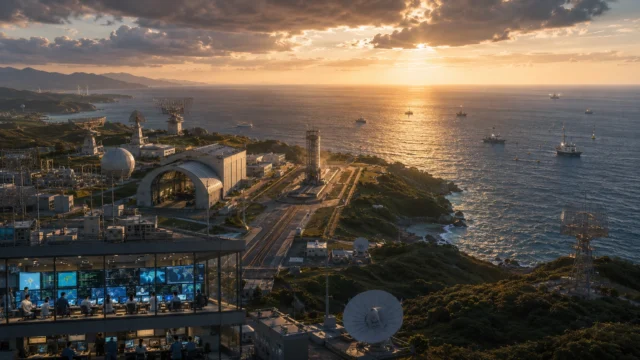
China’s construction of artificial islands represents the most dramatic physical change to the region in decades. Mischief Reef, Subi Reef, and Fiery Cross Reef now host military-grade runways, radar installations, and deep-water ports capable of supporting naval operations far from the Chinese mainland.
These facilities extend Beijing’s operational reach by hundreds of miles, creating new facts on the water that complicate rival claims. The Philippines and Vietnam have responded with their own modest infrastructure projects, but nothing approaching China’s scale or capability.
Naval Buildups Reflect Rising Stakes
Military presence in the South China Sea has expanded dramatically as competing nations seek to back diplomatic positions with credible force. The Chinese People’s Liberation Army Navy now maintains a permanent flotilla in the region, supported by coast guard vessels that often engage in close encounters with foreign ships.
The United States has intensified freedom of navigation operations, conducting 13 such missions in 2023 compared to five in 2017. American destroyers and cruisers regularly transit within 12 nautical miles of disputed features, asserting the principle of innocent passage while demonstrating resolve to allies.
Regional navies are also strengthening their capabilities. Vietnam has acquired six Kilo-class submarines from Russia, while the Philippines is modernizing its coast guard fleet with Japanese assistance. These acquisitions reflect a broader trend toward military competition in previously civilian-dominated waters.
Supply Chain Vulnerabilities Multiply
Any significant conflict in the South China Sea would immediately disrupt global trade networks that depend on predictable shipping schedules and stable fuel costs. Electronics manufacturers in particular face concentrated risk, as components often cross these waters multiple times during production cycles spanning several countries.
Energy flows present another vulnerability. Liquefied natural gas shipments from Australia and Qatar to Northeast Asian buyers transit the South China Sea, making regional stability essential for energy security in Japan, South Korea, and Taiwan. A prolonged closure could force costly diversions through longer Pacific routes.
Insurance markets already price in geopolitical risk, with war risk premiums for South China Sea transits increasing 40% since 2020. Lloyd’s of London estimates that a one-month closure of the Malacca Strait would cost global trade approximately $200 billion, demonstrating the economic stakes involved.
Strategic Partnerships Reshape Regional Balance
Countries concerned about Chinese expansion have strengthened security cooperation through overlapping partnerships that blur traditional alliance structures. The Quad grouping of the United States, Japan, India, and Australia coordinates maritime domain awareness, while AUKUS enables submarine technology sharing between Australia, Britain, and America.
Southeast Asian nations pursue more cautious balancing strategies. The Philippines has granted expanded base access to American forces while maintaining economic ties with China. Vietnam accepts Russian military equipment while welcoming increased Japanese investment in coast guard capabilities.
These partnerships reflect a broader shift from bilateral relationships toward networked security arrangements designed to share costs and risks across multiple partners. The approach allows smaller nations to maintain some strategic autonomy while benefiting from great power backing.
Diplomatic Solutions Remain Elusive
Multilateral negotiations have failed to produce binding agreements despite decades of effort. The Association of Southeast Asian Nations has sought to broker a comprehensive Code of Conduct with China since 2002, but progress remains slow due to fundamental disagreements over scope and enforceability.
Bilateral talks between China and individual claimant states often focus on joint development arrangements for fisheries and energy resources. However, these practical measures fail to address underlying sovereignty disputes, leaving core tensions unresolved.
The 2016 arbitration ruling that rejected China’s nine-dash line claims under international law demonstrated the limits of legal remedies when major powers refuse to accept unfavorable decisions. Beijing’s dismissal of the tribunal’s authority highlighted how legal frameworks require political will to function effectively.
A Powder Keg in Global Waters
The South China Sea represents one of the most dangerous flashpoints in contemporary international relations, where economic interests, territorial claims, and great power competition intersect in an volatile mix. Minor incidents between coast guard vessels or fishing boats could spiral into broader confrontations with global consequences.
In my view, this region is one of the most likely places for unintended escalation. The stakes are high, and even minor incidents could have global consequences. The combination of overlapping jurisdictions, regular military patrols, and enormous economic interests creates conditions where miscalculation becomes increasingly probable.
The path forward requires acknowledging that geography will continue shaping global power, but managing competition through clear rules and communication mechanisms that prevent accidents from becoming crises. Until then, the South China Sea remains a strategic flashpoint where the future of international trade and regional stability hangs in the balance.